
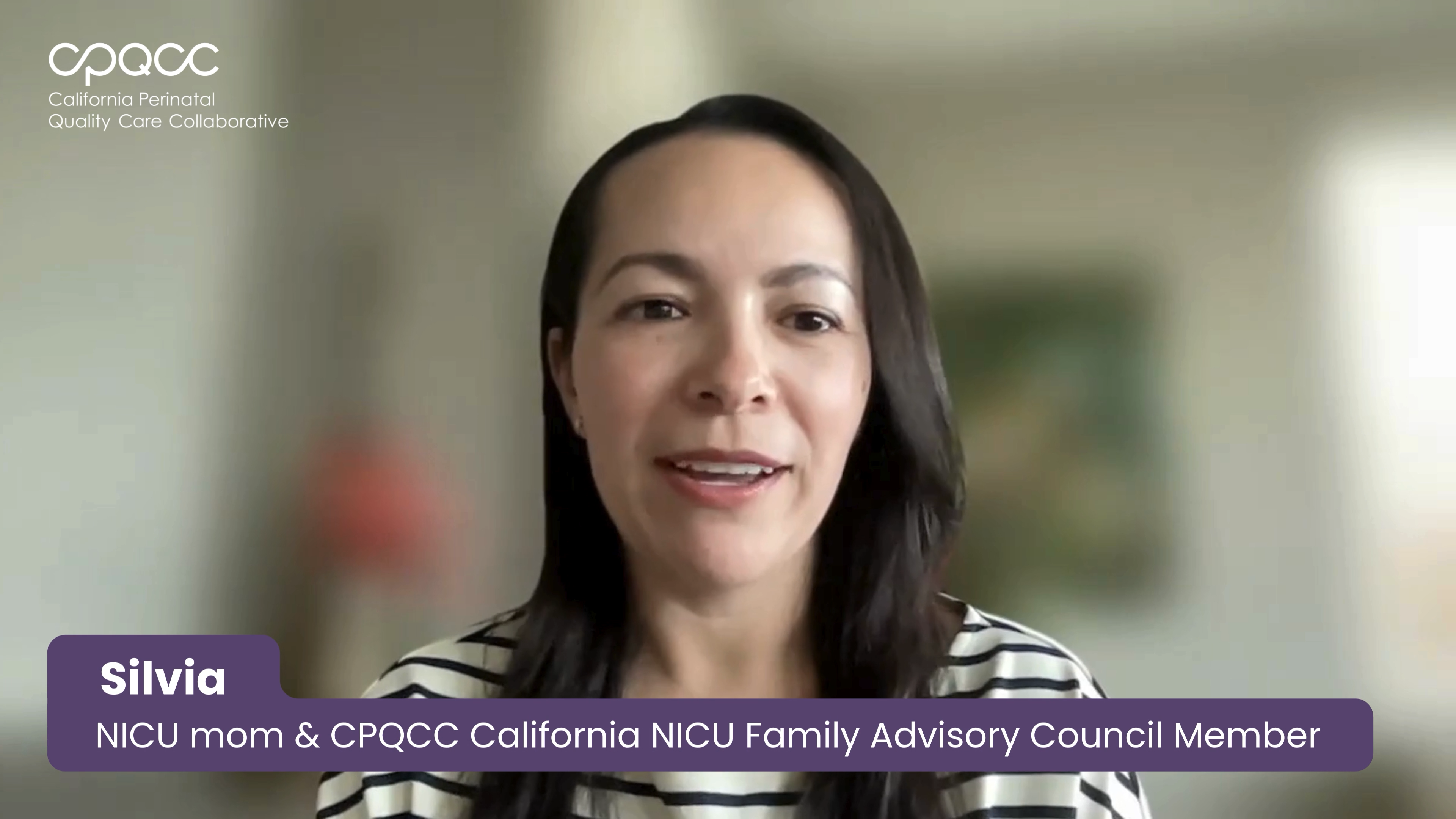
Listen to Silvia, member of CPQCC's California NICU Family Advisory Council, share her experience with communication, highlighting what helped, what didn’t, and how connection shaped her NICU journey.
Lost in Translation: Breaking Down Barriers in the NICU
I am a NICU mom. My son was a 24-weeker. His name is Felix and he was in the NICU for five months. When I was in the NICU, honestly the scariest part of the whole experience was the unknown. It was traumatizing. It was scary. It was so difficult to be there. And when you don't know the language in the NICU, how much more unknown is this journey? How much more traumatizing is it to not be able to understand what's going on around you? Even as an English speaker – the medical language, everybody running around – it was overwhelming. And it was just so, frightening.
I'm a Spanish and English-speaking NICU mom, so I had the benefit of witnessing the differences in treatment for both English-speaking and Spanish-speaking parents. In some ways, I was able to experience both. As an English speaker, I received one form of treatment, and as a Spanish speaker I was able to sort of experience it by proxy because I was really fortunate to be able to help other Spanish-only speaking families while I was there to translate. There were a lot of day-to-day conversations that they were having and whenever I was around I would get pulled in and I would translate for them. But the day-to-day stuff – when you're in the room and the nurse comes in and you have those chats and you build a rapport – I had that benefit. I had that experience all the time.
My husband and I formed really fantastic friendships and relationships with the whole team. And it really makes me wonder, what were the Spanish-speaking families experiencing? Did they actually have that or was it really just strictly business or the bare minimum, like, “Hi, how are you?”
I think when you're working through a translator there's a lot that can be lost. One of the moms specifically that I remember was a NICU nurse and she only spoke Spanish. She was from Colombia, I think, and the communication was really difficult. I had to translate the words, but there was a lot, the emotion – you know, kind of those scary things – it was lost because everything was so fast. If she had any follow up questions if I wasn't around she had to wait and write everything down. And I think in those moments, it becomes even more traumatizing. And I also think that those everyday chats with the nurses and the doctors is where you build your confidence and your resilience as a parent. Because if all you're getting is the big reports you're not really getting the really nitty gritty details.
How can the staff be receptive to these families that don't speak the language if there isn't full transparency and communication? I truly believe that family-centered care is only possible when both families and providers understand each other, and that includes where they're at emotionally, how much confidence they have in the options that are available for treatment, and what their roles are in this process.
Language barriers like this automatically limit the words used to the bare minimum, and the NICU really requires more. We need to do better to support families that don't speak English as a first language so that the unknown becomes known, to help reduce trauma, and to improve mental health outcomes. And ultimately, this is so that those babies and their families can thrive.